Moving to land on the Indian River Lagoon in the 1880’s was no easy feat, but the end of the Civil War saw the repopulation of Florida as many were searching for a better life. Many of the families arriving at its shores came from the south and somewhat understood humid, scorching, and rainy Florida, while those from the north did not. Although the growing seasons were a little different, crops were quickly planted.
From historical documents, we know the pioneer families grew peppers, beans, squash, okra, pumpkin, cabbage, cucumber, tomatoes, and potatoes in their kitchen gardens. This garden fed the family. Families also grew sugarcane, sand pears, peaches, bananas, pineapples, mangoes, scuppernogs, and of course citrus. These crops were sold, bringing much needed money to a homestead. According to the Florida Star article in November 1888, JR Field of Indianola, planted his sugarcane in 1873, and that ‘three canes could garner 10 quarts of juice.’ Ten gallons of raw juice made one gallon of cane syrup. Early on, cane syrup was worth about 35 cents a gallon.
One thing many newcomers may not have been accustomed to is hurricanes. During the hurricane of August 1880, residents of this area were forced inside for four straight days, while the winds and rain whipped overhead. The hurricane made landfall south of what became Cocoa Beach, and folks from Jupiter Inlet to the St. Johns River over to Cedar Key felt its effects. It is said that some families survived the storm by eating only conch peas. This type of pea is also called a Carolina conch pea and is perhaps something they brought down from their homes outside Charleston.
Brevard’s citrus history began with pioneers who established groves on Merritt Island in the 1800s. The region thrived with citrus fueled by fertile soil and the Indian River’s microclimate until severe freezes in 1894 and again in 1985.
The Florida East Coast Railroad, built by Henry Flagler, arrived in 1886 and major growth followed. Growers could ship fruit and produce statewide and beyond spurring growth.
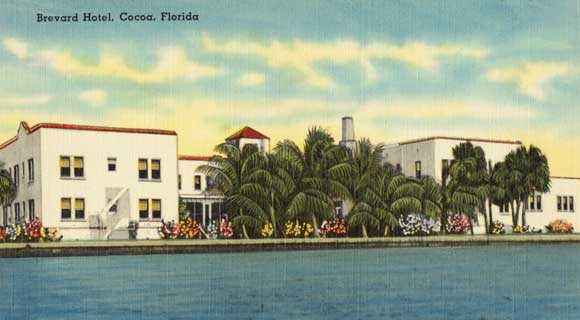
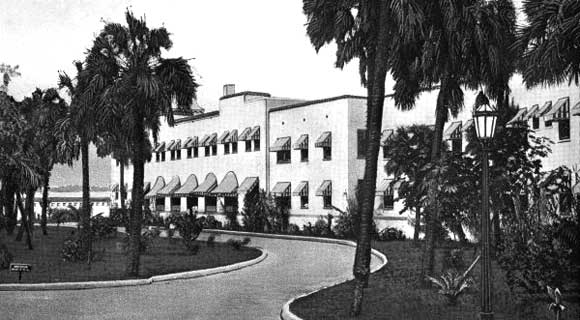
Then came the Grand Old Lady built on Oleander Pointe.
“Built in 1922, the Brevard Hotel rose on a four-acre estate overlooking the lagoon, offering 53 rooms spread across an 18,000-square-foot property. Guests came for rest, relaxation, and the waterfront views that made the Space Coast a quiet jewel long before the rocket age.
By the 1930s, however, the once-promising resort had fallen into disrepair—until a determined family from Chicago brought it back to life. Hartley C. Laycock Sr., a former banker who had weathered the Great Depression, purchased and restored the abandoned hotel.
With community support and funds raised back in Chicago, the renovated Brevard Hotel reopened in December 1934, quickly regaining its reputation as a winter haven.
For decades, the hotel flourished. Travel brochures from the 1950s invited “snowbirds” to Cocoa for a season of sunshine, comfort, and Southern charm. Guests paid less than $10 a night, enjoyed continental breakfasts in the lobby, and even received the seventh night free after paying for six.
The hotel’s corridors echoed with laughter, music, and even a Betty Crocker radio broadcast that once aired from the property. Families gathered in its lobby, romances bloomed and generations carried home stories of the elegant retreat on the lagoon.
But the golden era faded. By the early 1960s, the Laycock family sold the property. In the 1990s, financial troubles beset then-owner Tony Ninos, who struggled with back taxes and the cost of maintenance. In 1996, the Brevard Hotel was sold and ultimately torn down, replaced by Oleander Pointe Condominiums.”1
1 Space Coast Daily // September 28, 2025: A Grand Lady Remembered: Cocoa’s Brevard Hotel Stood as a Beacon of Elegance for Seven Decades